
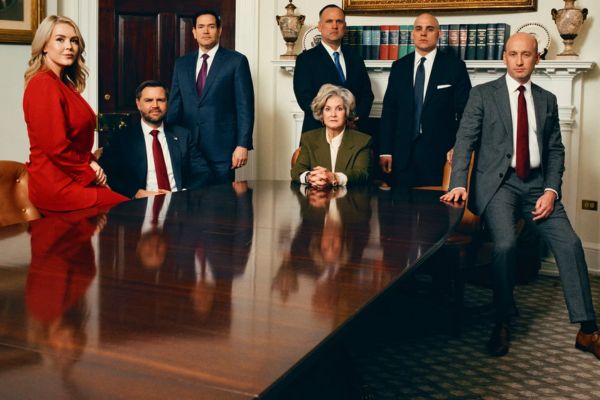
The phrase Vanity Fair Karoline Leavitt started appearing everywhere almost at once. Not because of a policy announcement. Not because of a speech. But because of a set of photographs that felt, to many viewers, unusually intimate for official White House imagery.
In an age where political visuals are carefully managed, these images cut against expectation. They felt close. Personal. Almost uncomfortable for some. And that discomfort is exactly what turned a photo spread into a full-blown cultural conversation.
How Vanity Fair Karoline Leavitt Became a Talking Point
The Vanity Fair Karoline Leavitt spread appeared as part of a broader editorial approach that has increasingly blurred the line between documentation and interpretation. Rather than wide, ceremonial frames, the focus leaned toward facial expression, stillness, and proximity.
Viewers did not debate whether the photos were technically good. They debated what they meant.
That question gained momentum once it became clear the images were part of a larger Vanity Fair article examining power, proximity, and the people who stand closest to it.
The Role Of Christopher Anderson Behind The Lens
A significant part of the conversation centered on Christopher Anderson, the photographer responsible for the images. Known for favoring closeness over distance, his work often invites viewers into moments that feel unguarded.
In this case, his approach sparked debate. Supporters argued the photos revealed the human weight of political roles. Critics felt the framing crossed into intrusion.
A detailed response defending the photographic intent explained how proximity was deliberate, not sensational, and how the goal was to document presence rather than provoke reaction. That defense helped contextualize the Vanity Fair photos as a study of power dynamics rather than a personal commentary.
Why Vanity Fair Photos Feel Different From Traditional Political Imagery
Standard political photography relies on distance. Podiums. Wide rooms. Structured moments. The Vanity Fair photos featuring Karoline Leavitt did the opposite.
They leaned inward.
That stylistic choice aligns with Vanity Fair white house photos from recent years, which often emphasize atmosphere over ceremony. The result can feel unsettling because it removes the buffer audiences are used to.
Who Is Karoline Leavitt In This Context?
Search interest around Karoline Leavitt surged as the images circulated. As a White House Secretary, she occupies a role built on messaging, discipline, and control. Seeing someone in that position portrayed without visual distance naturally triggers reaction.
The debate was not about her qualifications or politics. It was about visibility. How much access is too much when documenting power?
The Broader Vanity Fair Trump Cabinet Conversation
The photos also fed into a wider discussion about how Vanity Fair Trump cabinet coverage differs from traditional political journalism. Rather than focusing purely on decisions or statements, the publication often leans into mood, symbolism, and visual narrative.
That approach invites criticism and praise in equal measure. Some see it as necessary cultural documentation. Others view it as editorial overreach.
Why This Vanity Fair Article Traveled So Fast
What made the Vanity Fair article travel was not outrage alone. It was ambiguity. The images did not tell viewers what to think. They asked viewers to sit with uncertainty.
That kind of visual storytelling thrives online. It encourages screenshots, commentary, and reinterpretation. In short, it invites participation.
What This Moment Says About Power And Image
The reaction to Vanity Fair Karoline Leavitt reveals more than opinions about one photo spread. It highlights how tightly controlled political imagery usually is, and how disruptive it feels when that control loosens even slightly.
In the end, the conversation was never just about photographs. It was about access. Perspective. And who gets to decide how power is seen.
Whether admired or criticized, the images did what influential visual journalism is meant to do. They made people stop scrolling, look longer, and ask uncomfortable questions.
Segurobet… Is it safe? Hehe, I don’t know. Just checked it out. Looks like an ordinary site. Give them a try if you feel brave, but be careful out there: segurobet